
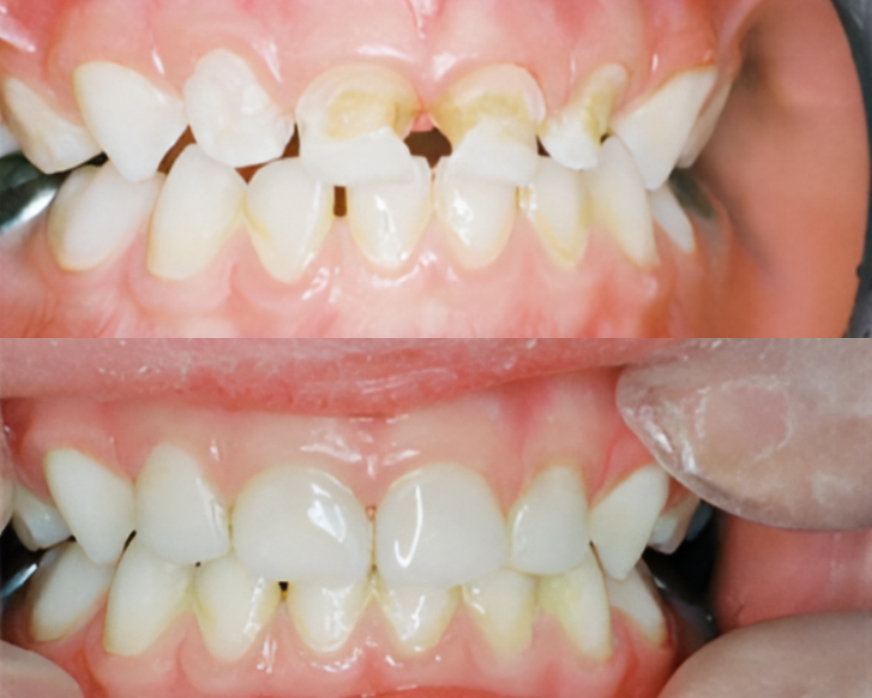
Pulpectomy
Pulpectomy is a dental procedure performed to save a severely infected or damaged tooth, especially in children. The infected pulp is removed, the canals are cleaned, and the tooth is filled to prevent further infection and preserve the tooth until it naturally falls out.
This treatment is often necessary when tooth decay or trauma affects the nerve tissue inside the tooth, causing pain, swelling, or abscess. Unlike adult root canals, pulpectomies are done in primary (milk) teeth to relieve discomfort and preserve the tooth until it naturally falls out.
Why Is Pulpectomy Important?
- Relieves pain and infection: It helps reduce toothache and swelling caused by infected pulp tissue.
- Preserves the baby tooth: Maintains space for the permanent tooth and ensures normal speech and chewing.
- Prevents early tooth loss: Early loss of baby teeth can lead to misaligned permanent teeth.
- Avoids spreading infection: Prevents the infection from reaching surrounding teeth or bone.
- Restores strength with SS crown: For posterior (back) teeth, a stainless steel (SS) crown is placed after pulpectomy to protect the treated tooth, restore function, and prevent future fractures or reinfection.
The procedure is safe and performed under local anesthesia. After cleaning and disinfecting the root canals, the dentist fills them with a resorbable material and seals the tooth with a crown or filling.